Peptide Dosage Chart
How many units to draw on an insulin syringe for each dose — by vial size and how much bacteriostatic water you added. Find your vial below, or run any combination in the peptide calculator. Educational only, not medical advice.
How to read it: find your dose down the left, then read across to how much bacteriostatic water you added. The cell is the units to draw on a U-100 syringe. A tiny value is hard to measure — add more water; a ⚠ value won’t fit a 1 mL (100-unit) syringe — add less.
5 mg vial — peptide dosage chart
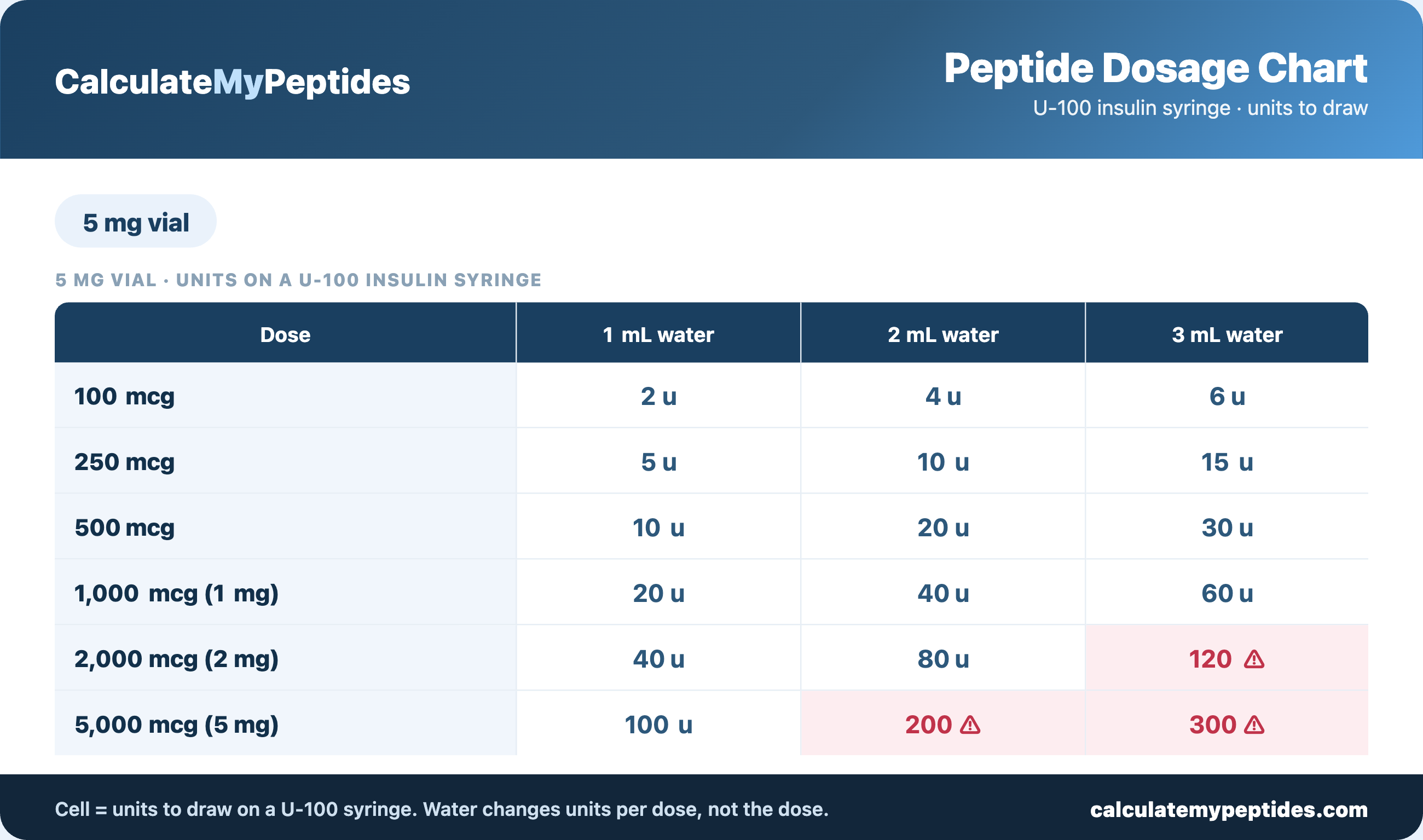
| Dose | 1 mL water | 2 mL water | 3 mL water |
|---|---|---|---|
| 100 mcg | 2 u | 4 u | 6 u |
| 250 mcg | 5 u | 10 u | 15 u |
| 500 mcg | 10 u | 20 u | 30 u |
| 1,000 mcg (1 mg) | 20 u | 40 u | 60 u |
| 2,000 mcg (2 mg) | 40 u | 80 u | 120 ⚠ |
| 5,000 mcg (5 mg) | 100 u | 200 ⚠ | 300 ⚠ |
10 mg vial — peptide dosage chart
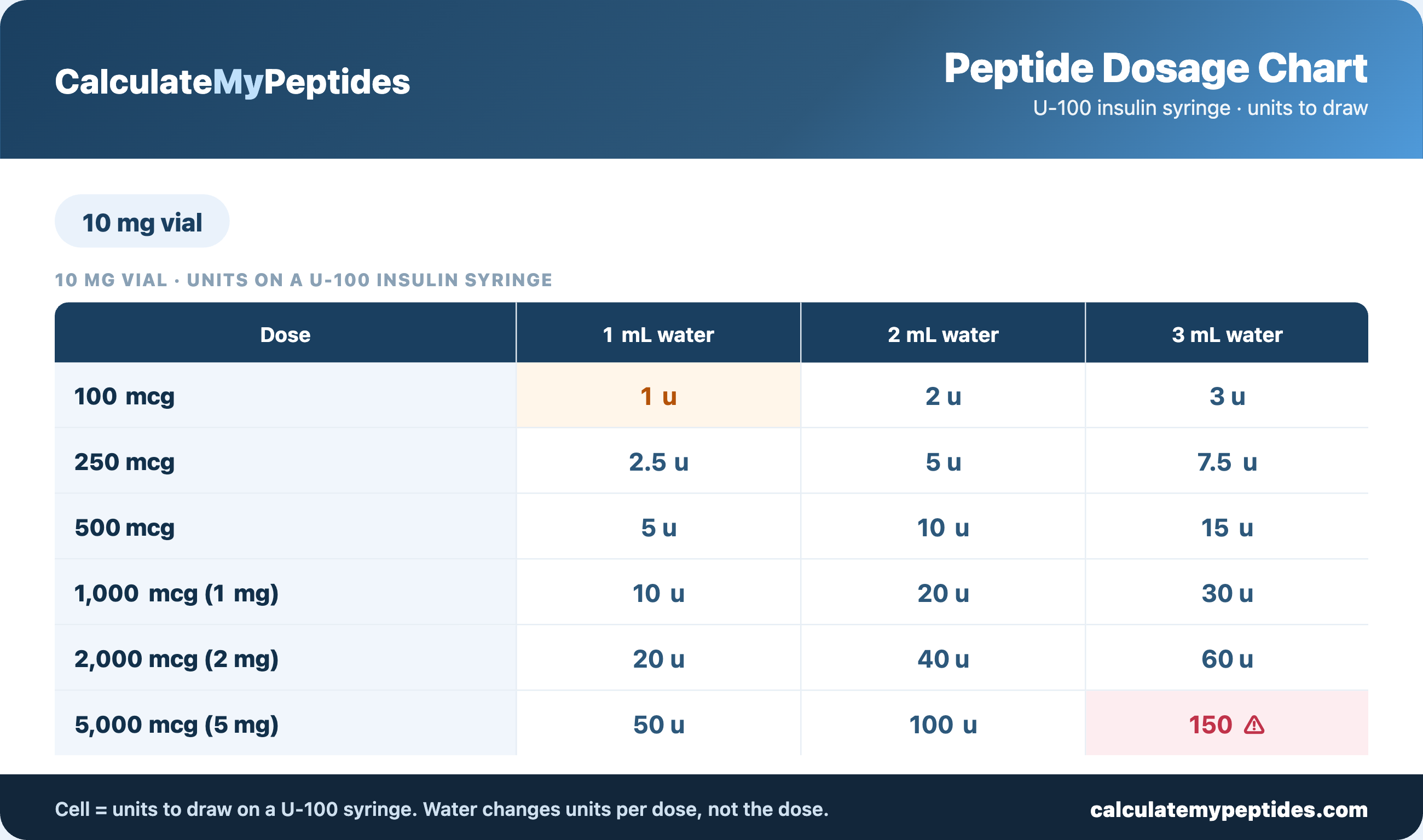
| Dose | 1 mL water | 2 mL water | 3 mL water |
|---|---|---|---|
| 100 mcg | 1 u | 2 u | 3 u |
| 250 mcg | 2.5 u | 5 u | 7.5 u |
| 500 mcg | 5 u | 10 u | 15 u |
| 1,000 mcg (1 mg) | 10 u | 20 u | 30 u |
| 2,000 mcg (2 mg) | 20 u | 40 u | 60 u |
| 5,000 mcg (5 mg) | 50 u | 100 u | 150 ⚠ |
20 mg vial — peptide dosage chart
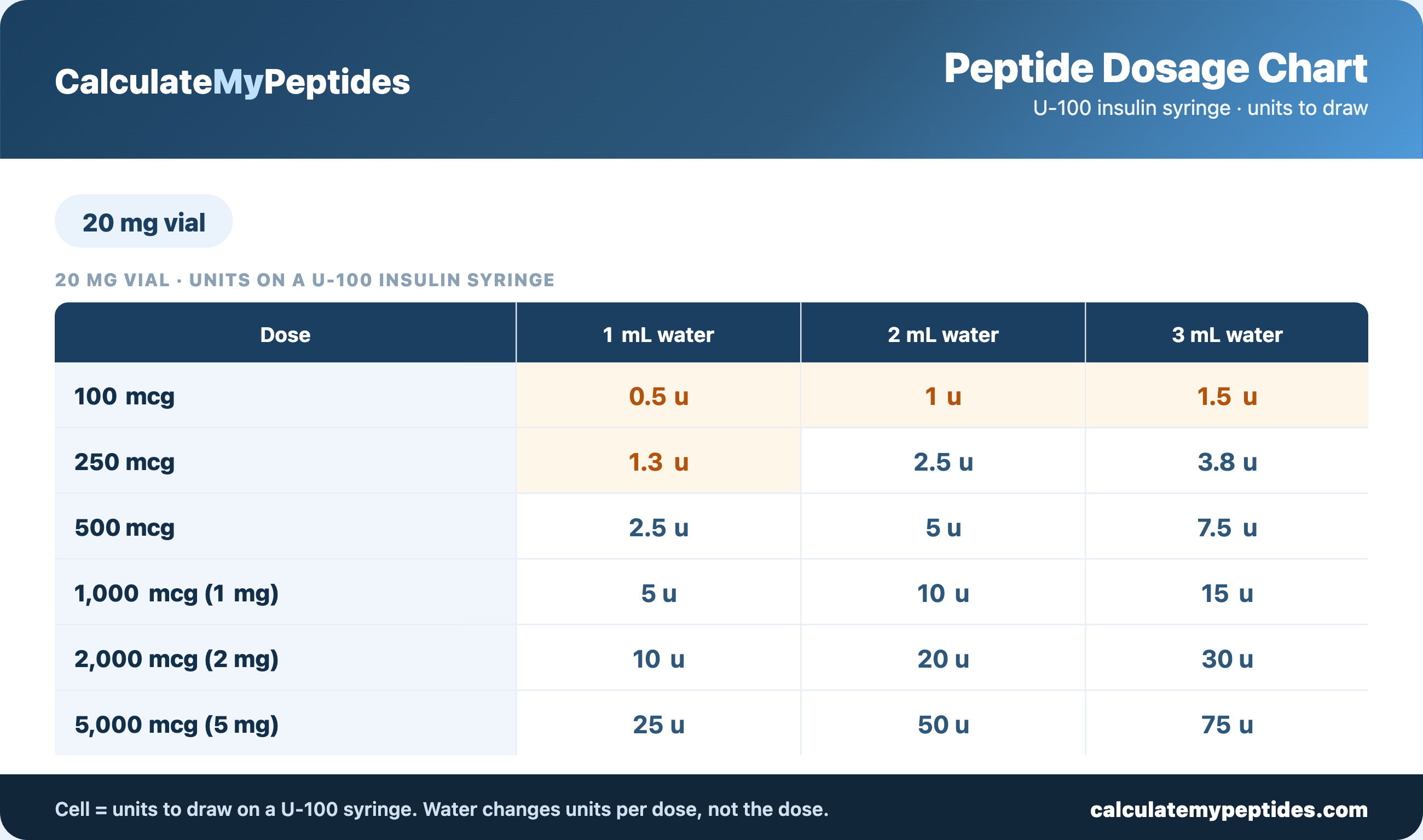
| Dose | 1 mL water | 2 mL water | 3 mL water |
|---|---|---|---|
| 100 mcg | 0.5 u | 1 u | 1.5 u |
| 250 mcg | 1.3 u | 2.5 u | 3.8 u |
| 500 mcg | 2.5 u | 5 u | 7.5 u |
| 1,000 mcg (1 mg) | 5 u | 10 u | 15 u |
| 2,000 mcg (2 mg) | 10 u | 20 u | 30 u |
| 5,000 mcg (5 mg) | 25 u | 50 u | 75 u |
30 mg vial — peptide dosage chart
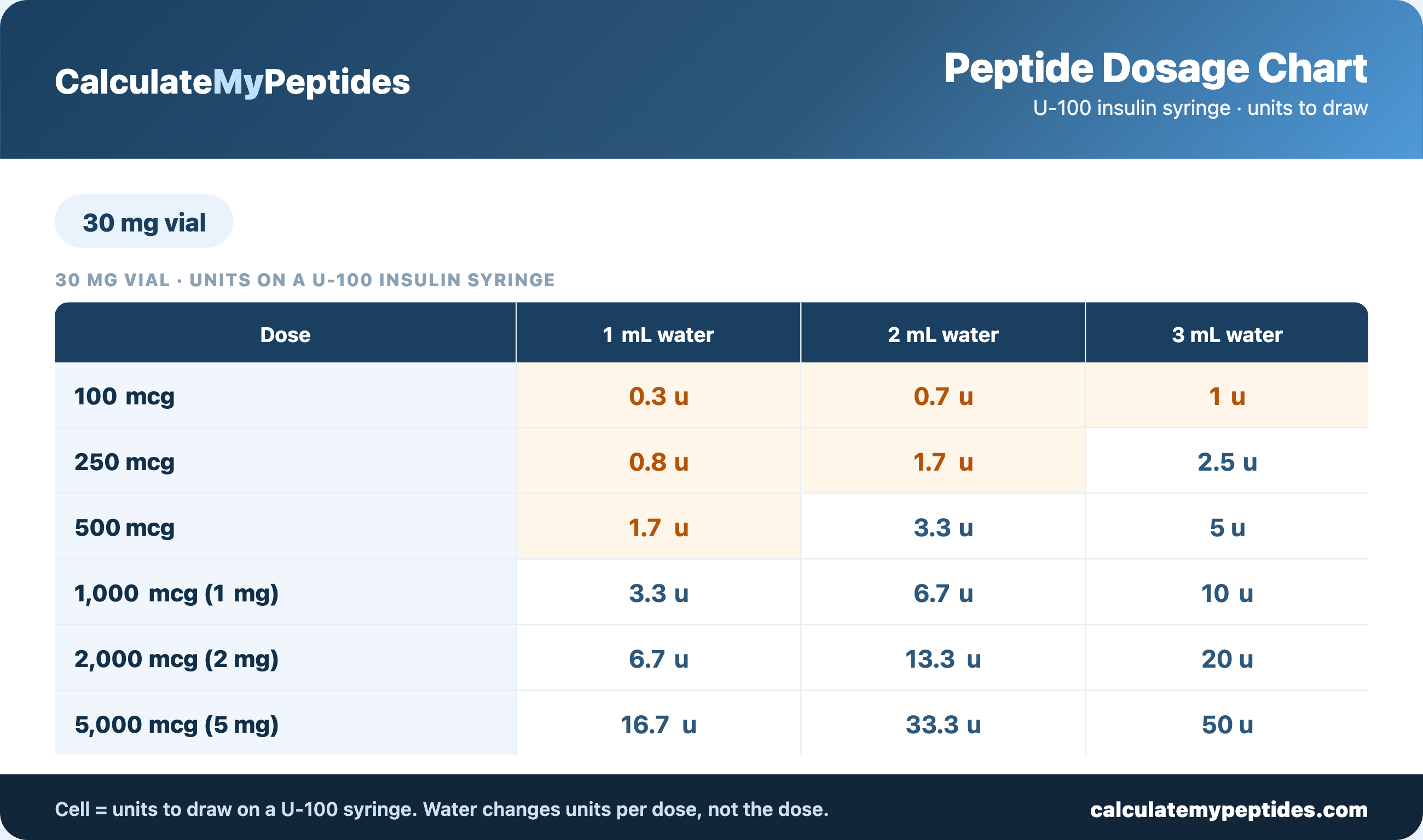
| Dose | 1 mL water | 2 mL water | 3 mL water |
|---|---|---|---|
| 100 mcg | 0.3 u | 0.7 u | 1 u |
| 250 mcg | 0.8 u | 1.7 u | 2.5 u |
| 500 mcg | 1.7 u | 3.3 u | 5 u |
| 1,000 mcg (1 mg) | 3.3 u | 6.7 u | 10 u |
| 2,000 mcg (2 mg) | 6.7 u | 13.3 u | 20 u |
| 5,000 mcg (5 mg) | 16.7 u | 33.3 u | 50 u |
40 mg vial — peptide dosage chart
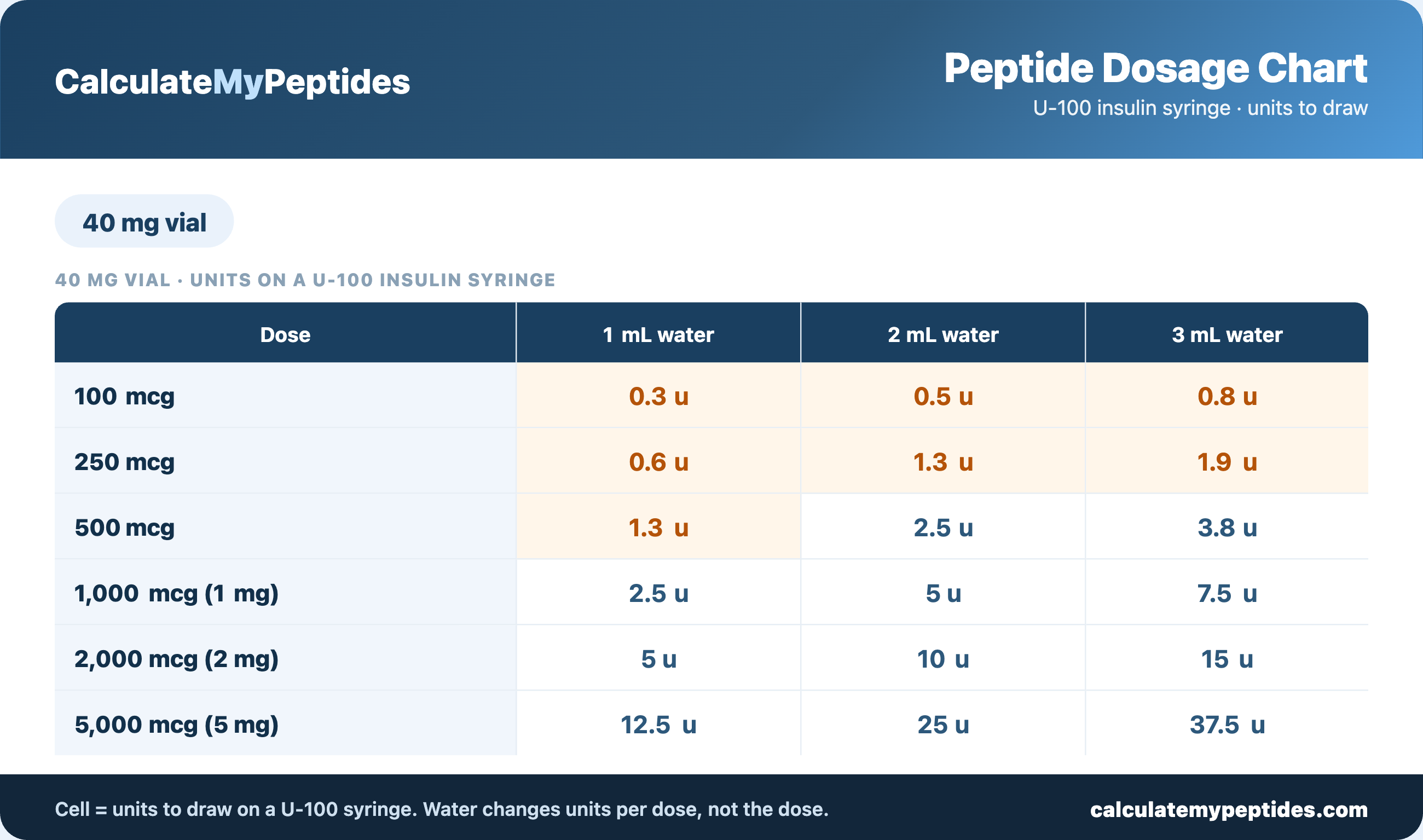
| Dose | 1 mL water | 2 mL water | 3 mL water |
|---|---|---|---|
| 100 mcg | 0.3 u | 0.5 u | 0.8 u |
| 250 mcg | 0.6 u | 1.3 u | 1.9 u |
| 500 mcg | 1.3 u | 2.5 u | 3.8 u |
| 1,000 mcg (1 mg) | 2.5 u | 5 u | 7.5 u |
| 2,000 mcg (2 mg) | 5 u | 10 u | 15 u |
| 5,000 mcg (5 mg) | 12.5 u | 25 u | 37.5 u |
60 mg vial — peptide dosage chart
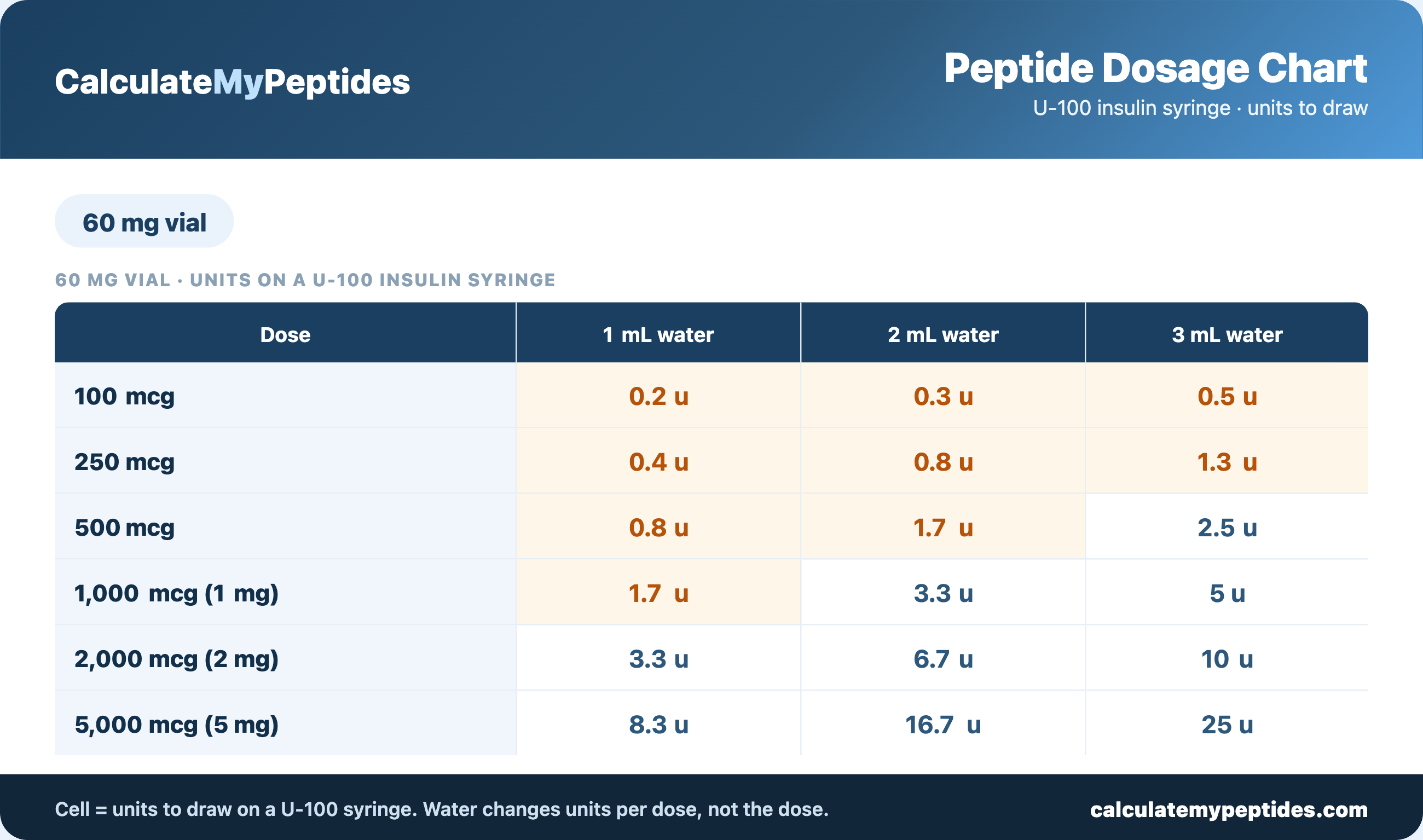
| Dose | 1 mL water | 2 mL water | 3 mL water |
|---|---|---|---|
| 100 mcg | 0.2 u | 0.3 u | 0.5 u |
| 250 mcg | 0.4 u | 0.8 u | 1.3 u |
| 500 mcg | 0.8 u | 1.7 u | 2.5 u |
| 1,000 mcg (1 mg) | 1.7 u | 3.3 u | 5 u |
| 2,000 mcg (2 mg) | 3.3 u | 6.7 u | 10 u |
| 5,000 mcg (5 mg) | 8.3 u | 16.7 u | 25 u |
These charts assume a U-100 insulin syringe (100 units = 1 mL). The amount of bacteriostatic water never changes your dose — only how many units you draw for it. For a vial size, water amount, or dose not shown here, the calculator gives the exact units and a syringe diagram, and each compound has its own per-peptide dosing chart.
Peptide dosage chart FAQ
What is a peptide dosage chart?
A peptide dosage chart shows how many units to draw on an insulin syringe for a given dose, based on your vial size and how much bacteriostatic water you added. It turns the reconstitution math — milligrams in the vial, millilitres of water, and micrograms per dose — into a simple “draw to this many units” lookup.
How do I read the chart?
Pick the table for your vial size, find your target dose down the left, then read across to the column for how much bacteriostatic water you added (1, 2, or 3 mL). The number in that cell is the units to draw on a U-100 insulin syringe.
Does adding more or less water change my dose?
No. The amount of bacteriostatic water only changes the concentration — and therefore how many units you draw — not the actual amount of peptide in each dose. More water means more units per dose (easier to measure small amounts); less water means fewer units.
What if my exact dose or vial size isn’t on the chart?
Use the calculator — enter any vial size, water amount, and dose and it returns the exact units to draw, the concentration, and doses per vial, with a syringe diagram. The charts here cover the most common combinations at a glance.